
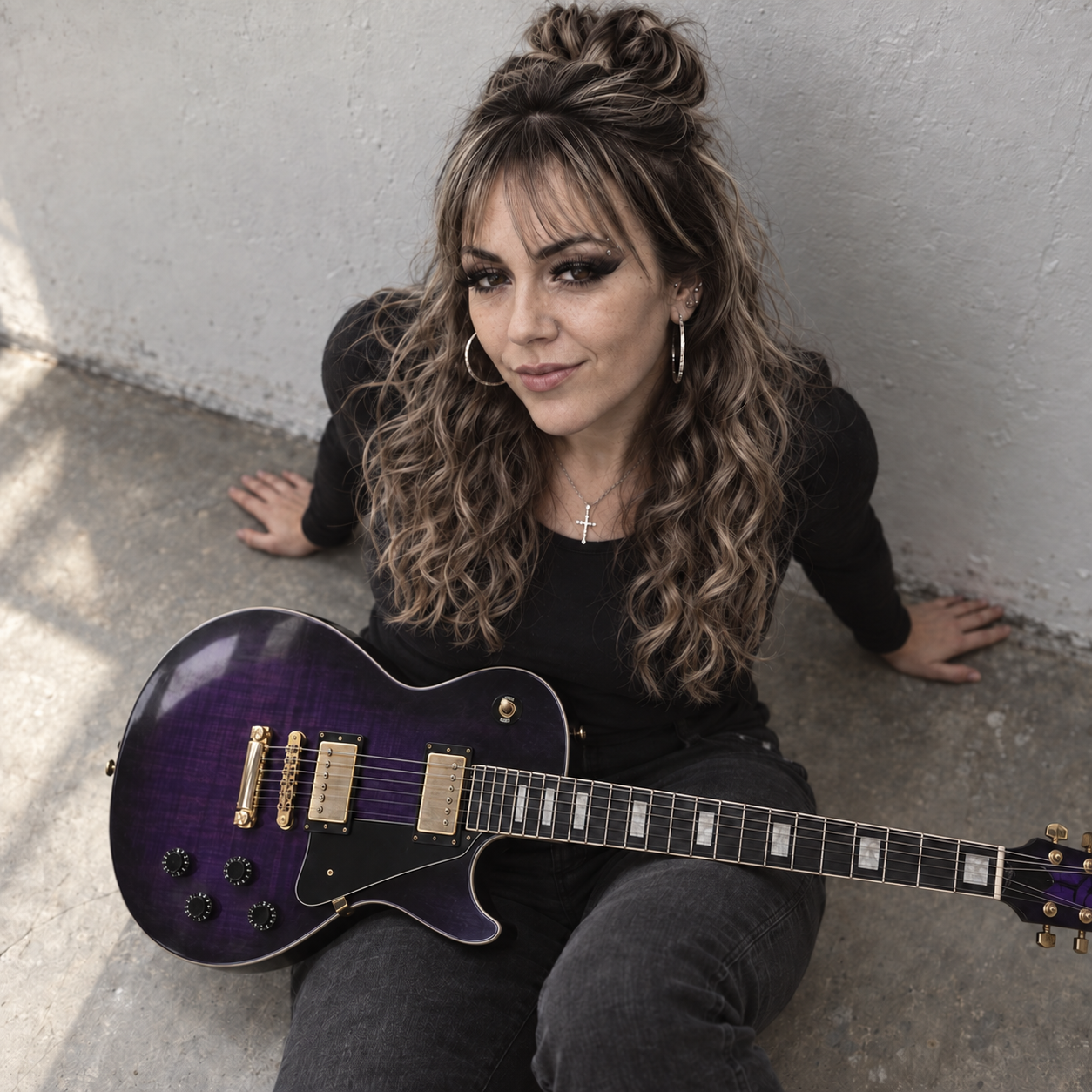
If someone asks what kind of music I make, the shortest honest answer is: it depends on the song.
My music does not stay in one genre. Some songs begin with acoustic guitar and feel raw and close. Others move toward dark pop, piano, country-pop, rock, or electronic production. That does not mean I am still searching for an identity. It means I have learned that my identity is bigger than one sound.
I am an independent artist who makes music that does not fit neatly into one genre, and I no longer see that as a problem. The emotion comes first. The genre follows.
I Follow the Emotion Before the Genre
When I start a song, I am not thinking, “This has to be pop,” or, “I need another acoustic track.” I am listening for the emotional center of the idea.
What does this song need in order to feel honest?
Sometimes the answer is a guitar that leaves plenty of room around my voice. Sometimes it is a piano carrying the weight of everything I am not saying. Sometimes the feeling needs a darker pulse, a stronger beat, or an electronic sound that keeps moving even when the lyrics are emotionally complicated.
I do not want to force a real feeling into the wrong production just because a genre label would be easier to explain. If a song feels tense, intimate, angry, haunted, defiant, or restless, I want the music around it to support that exact feeling.
That is why my catalog changes shape. I would rather follow the truth of the song than repeat a formula.
Every Song Asks for a Different Sound
You can hear that range across my releases.
“Like Hell You Won’t” is acoustic and defiant. The song came from the kind of anger that wakes something up inside you. It needed space, directness, and a vocal that did not hide what I meant.
“You Can’t Run From Love” moves in a completely different direction. It leans into techno and electronic energy. That movement fits the idea of trying to outrun a feeling that keeps finding you.
“Only Me” has a darker pop edge. “Everything She’s Not” leans closer to country-pop. “Don’t Walk Away” is led by piano, which gives the emotion a different kind of weight.
Then there is “I Don’t Fold”, a song built around concealed jealousy, unspoken love, emotional rivalry, and the decision not to give someone the reaction she wants. Its strength is restrained rather than loud. That story needed its own atmosphere too.
These songs do not sound identical, but they all sound like parts of me.
My Voice and Storytelling Are the Common Thread
Genre is not the only thing that gives an artist an identity.
For me, the connection between songs is my voice, my writing, and the emotional world I keep returning to. I write about the thoughts people try to hide, the conversations that never fully happen, the relationships that resist simple labels, and the moment someone finally admits what an experience did to them.
My voice also moves naturally. I shift between head voice and chest voice depending on what the song asks for. I used to think I might need to smooth out every difference so everything sounded more uniform. Now I hear those changes as part of the way I tell a story.
Whether the production is acoustic, electronic, piano-driven, or somewhere in between, I still want the listener to feel close to the words. I want the performance to sound human. I want each song to feel lived in instead of manufactured to fit a category.
That emotional honesty is the thread holding my music together.
Why I Stopped Forcing My Music Into One Category
Independent artists are often told that we need one clear genre so listeners, playlists, and algorithms know where to place us. I understand the practical side of that advice. Genre labels can help a new listener decide where to begin.
But a label becomes limiting when it starts making creative decisions for you.
If I had decided that every N!CØLE song had to sound exactly like the one before it, some of my songs would not exist in the form they do now. I might have rejected an electronic idea because it did not match an acoustic release. I might have removed a country-pop color or a darker pop texture just to make the catalog look tidier.
That would make my music easier to categorize, but it would make it less honest.
I would rather let the catalog show my range. Listeners are not one emotion all the time, and neither am I.
Genre Labels Are Useful, but They Are Not the Whole Story
I still choose genres when I distribute my music. Streaming services require categories, and those categories can help songs reach listeners who may connect with them.
I simply do not treat that choice as a permanent definition of who I am.
If I call one release acoustic, another dark pop, and another electronic, each label is an entry point. It describes something about that particular song. It does not describe the full boundary of what I am allowed to create next.
For listeners wondering why musicians change genres, sometimes the answer is not a marketing strategy or a dramatic reinvention. Sometimes a different story genuinely needs a different sound.
What Being a Genre-Fluid Artist Means to Me
I think of my music as genre-fluid because I let the writing move where it needs to move. That does not mean the choices are random. It means the emotion is leading them.
Being a genre-fluid artist gives me room to be curious. I can pick up an acoustic guitar for one song, build around piano for another, or follow an electronic rhythm when it creates the right emotional tension. I can make something softer without losing my edge, or something bigger without losing the intimacy.
Most importantly, I do not have to cut off part of my creativity to make my artist identity easier to summarize.
My sound is not one instrument, one tempo, or one genre. My sound is the way I turn emotion into a song.
Where to Start Listening
If you are new to my music, there is no single “correct” place to begin. Start with the feeling or sound that pulls you in:
- For acoustic defiance, listen to “Like Hell You Won’t.”
- For electronic energy, listen to “You Can’t Run From Love.”
- For a piano-led emotional song, listen to “Don’t Walk Away.”
- For quiet strength and unresolved tension, listen to “I Don’t Fold.”
You can also explore all of my music here and decide for yourself what connects with you.
I may not stay in one genre, but I will keep following the feeling—and wherever the next song needs to go.
Frequently Asked Questions
Does an independent artist need to make only one genre?
Not in my experience. A clear identity matters, but identity can come from a voice, point of view, emotional tone, and style of storytelling—not only from using the same production on every song.
Is genre-fluid music the same as having no musical direction?
No. For me, being genre-fluid is a deliberate choice to let each song’s emotion guide its sound. The genres may change, but the honesty and storytelling remain consistent.
How do I choose a genre when releasing a song?
I choose the category that best describes the individual track. I treat it as a way to help listeners find that song, not as a rule controlling everything I make afterward.